MY DESIGN CONCEPT
Arrival > Reception > Waiting Area > Consultation > Treatment
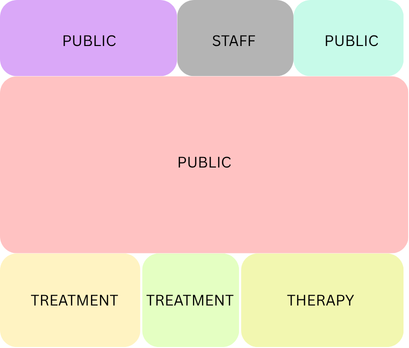
The user journey considered to reduces stress and anxiety and improve emotional comfort towards the healthcare experience, transitioning from public to private environments with clear circulations.
Zoning Diagram //
Design Issues
Anxiety Within Healthcare Environments
Healthcare environments can often create feelings of anxiety, stress, and discomfort for patients and visitors. Clinical atmospheres, harsh lighting, and crowded layouts may negatively affect emotional wellbeing and the overall healthcare experience.
Overstimulating Spaces & Poor Navigation
Overstimulating environments and unclear circulation can increase confusion and emotional stress within healthcare settings. Poor wayfinding and visually overwhelming spaces may reduce comfort, particularly for children, families, and individuals with sensory sensitivities.
Materiality & Sensory Comfort
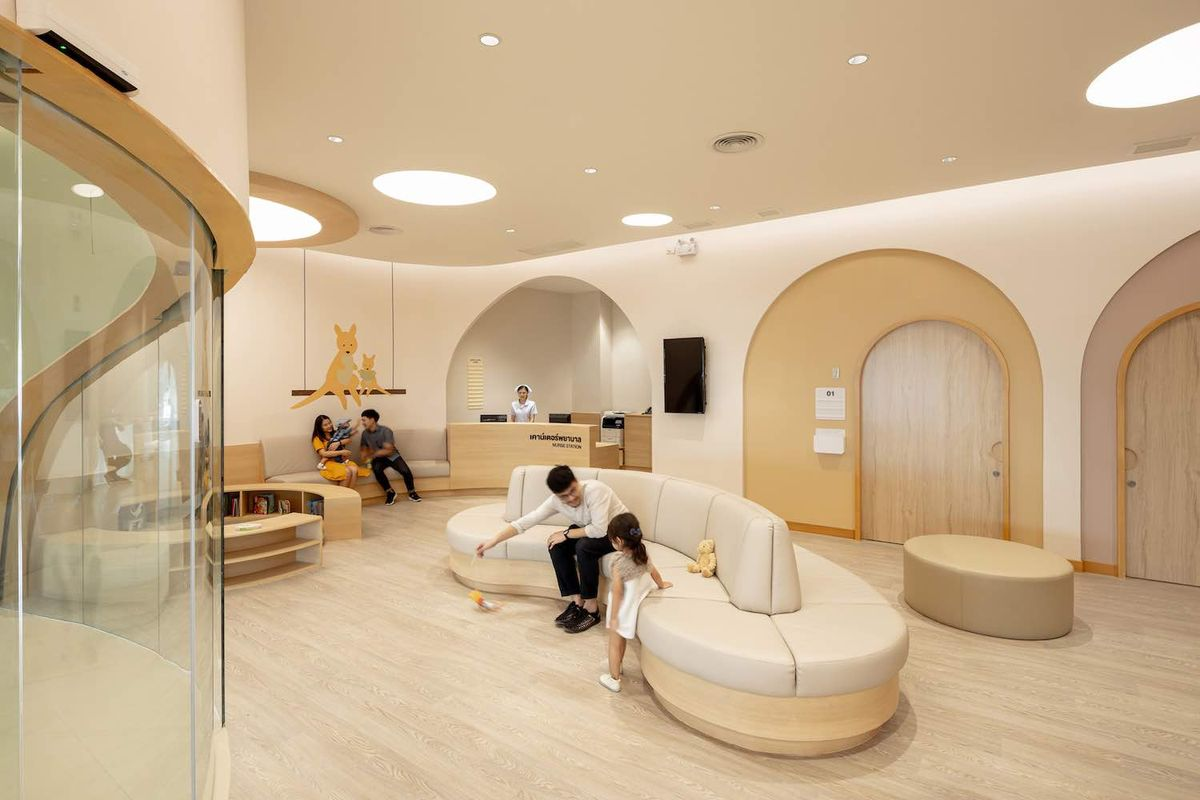
Materiality and lighting play an important role in shaping emotional comfort within interior environments. Through the use of natural materials, warm lighting, calming flooring finishes, and soft textures, the design aims to create a more welcoming and supportive healthcare experience.
Lighting Strategy
Indirect LED Lighting
Indirect LED strip lighting was integrated throughout the design to soften the harshness of direct overhead lighting. This creates a warmer and more welcoming atmosphere while enhancing the overall sensory experience within the healthcare environment.
Calm & Comfortable Atmosphere
Natural and indirect lighting between 3000K–3500K was considered to create a calm, balanced, and comfortable healthcare environment. The lighting approach helps reduce the harsh clinical feeling often found in traditional healthcare spaces.
Spatial Definition & Wayfinding
Lighting was also used to help define different zones within the interior environment. Layered lighting and ceiling-integrated lighting features guide circulation through the space, improving navigation and wayfinding for patients and visitors.
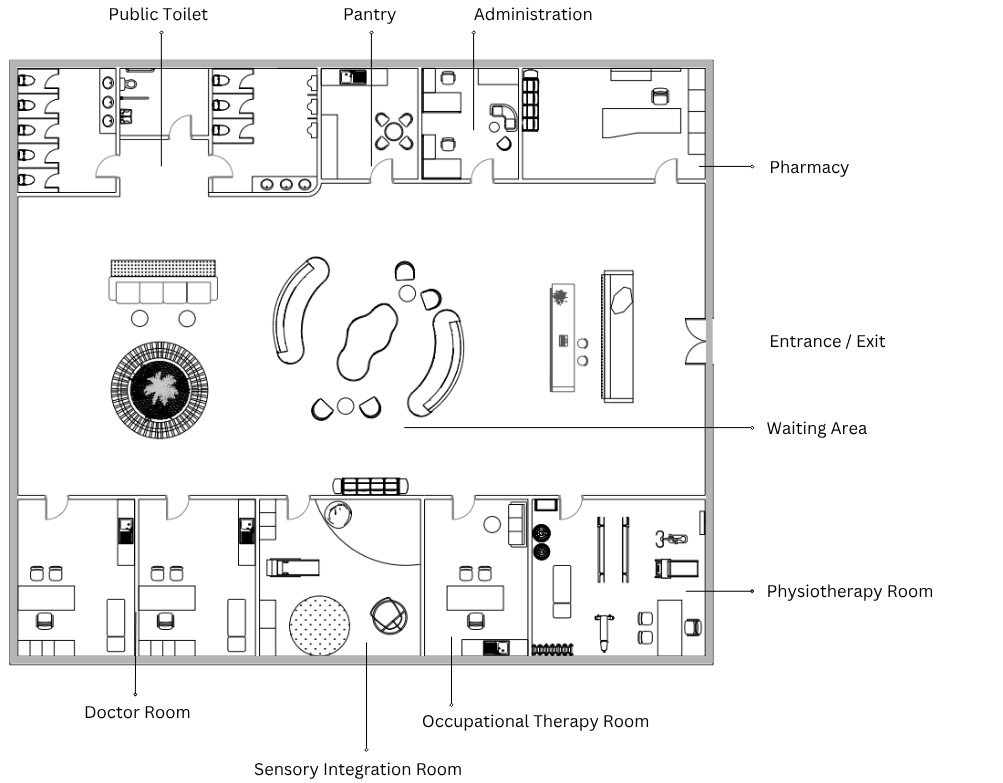
LAYOUT FLOOR PLAN
The spatial layout of SENSA was designed to create a clear, calming, and user-friendly healthcare environment. Public spaces such as the waiting area are centrally positioned to improve accessibility and circulation, while therapy and consultation rooms are organized around the perimeter to provide privacy and a quieter atmosphere. The open circulation strategy, combined with sensory-aware spaces and soft spatial zoning, helps reduce stress and improve navigation throughout the healthcare centre.